
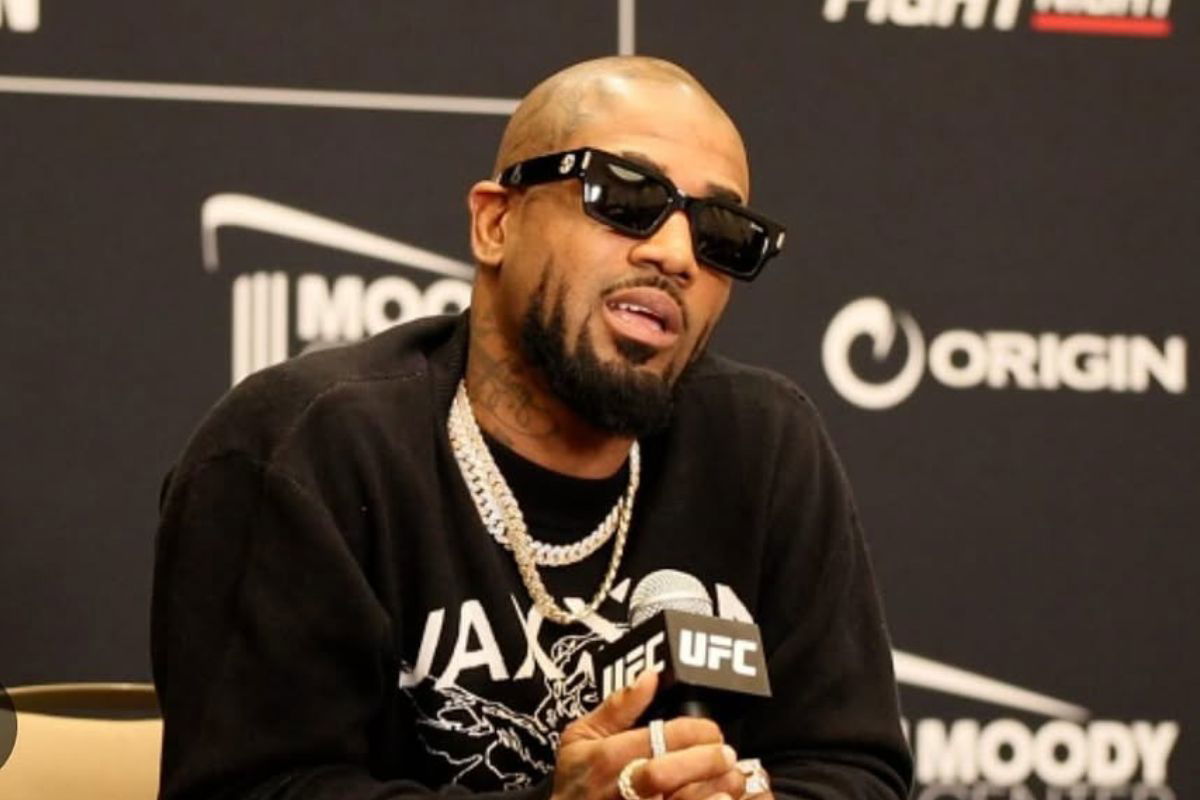
Bobby ‘King’ Green returns to the UFC Apex this weekend for a short-notice clash against Lance Gibson Jr., but his journey to fight night has always been defined by far more than wins and losses. His story isn’t one of privilege or easy roads. It’s a tale of resilience, of fighting against the odds long before he ever stepped foot in the Octagon. Having fought against adverse conditions all his life, ‘King’ started off his mixed martial arts journey in high school, when he fell in love with wrestling.
Watch What’s Trending Now!
His transition to MMA came because he wanted to earn enough money to take care of his children, which he wasn’t able to do as a warehouse worker. But Green never let his past define him. Instead, he used it as fuel. So, who is ‘King’ Green beyond the fight gloves and bright lights? Where does he come from, and who shaped the man he is today?
ADVERTISEMENT
What is Bobby Green’s ethnicity & nationality
Bobby Green was born on September 9, 1986, in San Bernardino, California, making him American by nationality. Ethnically, Green is African American, and his background is woven deeply into his early life experiences in Southern California.
His father, Mitchell Davis, was in and out of jail. His mother, Connie Scott, battled a dr*g addiction that made it impossible to care for her children. At just five years old, Green entered the foster care system.
Top Stories
Conor McGregor Set to Marry Dee Devlin in Secret Ceremony as Insider Reveals Wedding Date

Dana White Accused of Lying After Backtracking on Francis Ngannou ‘Physical’ Altercation Story
Who Is Arman Tsarukyan’s Father? Nairi Tsarukyan’s Net Worth, Profession & Businesses

Rampage Jackson’s Son Raja “Broke and Kinda Homeless” as He Awaits Sentencing Months After Assault Arrest
Donald Trump’s UFC White House Plans Add Another American Title Challenger as Valentina Shevchenko Faces Unexpected Twist

Even his name tells a story. His mother named him after Ray Green, a police officer who once saved her life. But did the man really exist? Green doesn’t know. He never met him, never saw a face to match the name.
ADVERTISEMENT
View this post on Instagram
And “Bobby”? That came from his father’s brother. His mother, fueled by anger toward his father, refused to name him Mitchell Jr. Instead, she chose the name out of spite.
ADVERTISEMENT
Despite the instability, one figure provided a brief moment of sanctuary—his grandmother. When his mother gave up parental rights, she stepped in, giving Bobby and his brother, Mitchell, a home. But tragedy struck again.
Bobby Green’s parents: Mitchell Davis and Connie Scott’s struggles
When Green was 14, she passed away, sending him back into the system. This time, he and his brother were separated. Mitchell went to an aunt’s home, while Bobby was taken in by the parents of his wrestling teammate, a family that gave him a chance at a different life.
ADVERTISEMENT
Through it all, ‘King’ Green held onto his faith. A devout Christian, he has often credited his belief in God as the force that kept him moving forward when everything else seemed to fall apart.
By his early 20s, he had cycled through nearly 50 different foster homes. The streets of Southern California’s Inland Empire were unforgiving. He lived in a world where kids either got swallowed by the streets or found a way to fight back.
Green’s escape came through wrestling. The sport became his anchor, his first taste of discipline. However, fighting in a gym was different from fighting for survival. The transition wasn’t easy. He didn’t love training. He skipped sessions. He drifted between commitment and old habits.
ADVERTISEMENT
Then came Jacob Behney. The head trainer at Pinnacle Mixed Martial Arts saw something in Green that others didn’t. He didn’t just see potential, in an interview with Fox Sports, he revealed, “I didn’t do it because of his potential, I did it because he has a good heart. This is a kid that should not become a statistic. The chips have been stacked against him for so long.”
Behney refused to let Green slip away. He would drive through the worst neighborhoods, knocking on doors, searching for his fighter. And often, those doors were guarded by men who didn’t take kindly to outsiders.
Following his victory over Clay Guida in June 2020, Green made it clear who he considered his true family.
ADVERTISEMENT
With emotion in his voice, he pointed to Benhey and said, “This is my father. I was born in foster care. I didn’t have a mother or father. They gave me a way. My father wasn’t fit to be my father. This is my dad here, Jacob Behney. He’s been there since the beginning. He’s done everything. He’ll lay his life down for me, I’ll lay my life down for him.”
Today, as he prepares to fight again at UFC Vegas 112, Green carries not just a nickname but a legacy, proof that even the harshest beginnings can produce a voice strong enough to echo across the sport.
ADVERTISEMENT
ADVERTISEMENT
ADVERTISEMENT
