
Imago
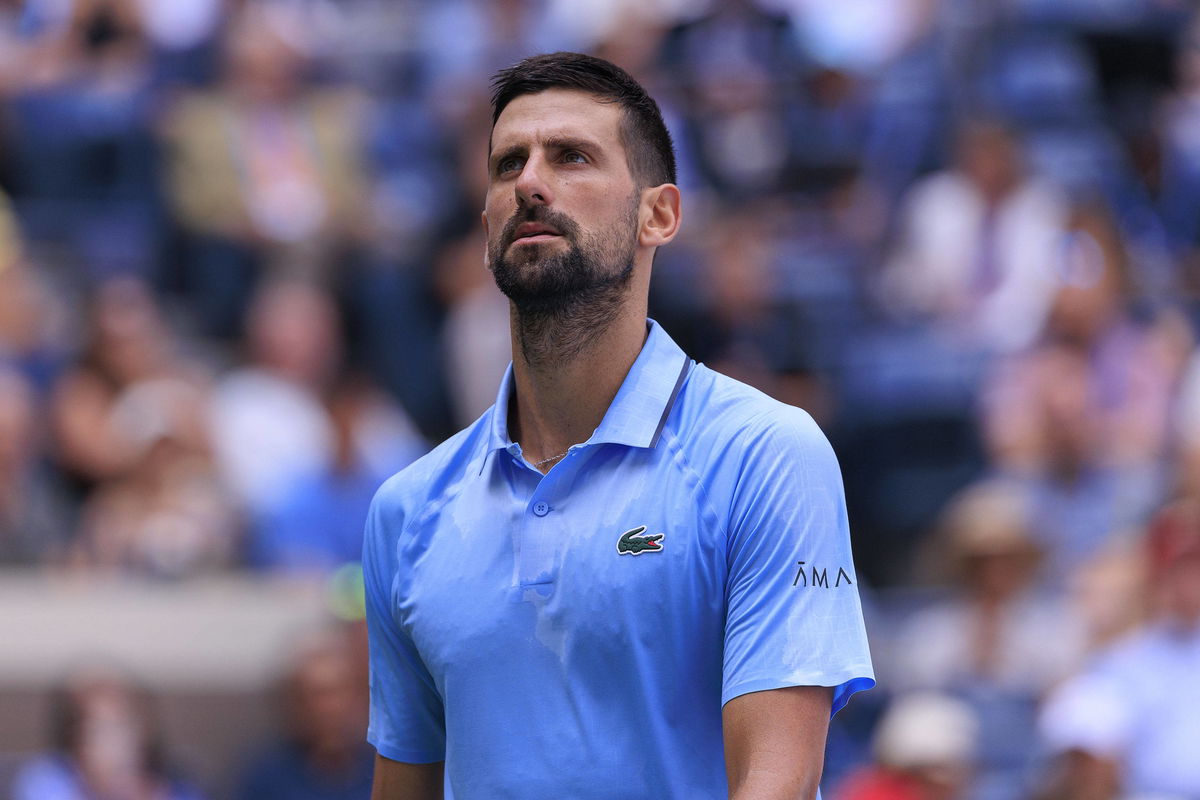
August 27, 2025, Flushing Meadows, New York, USA: Novak Djokovic during a match against Zachary Svajda on Day 4 of the 2025 US Open at USTA Billie Jean King National Tennis Center on Wednesday August 27, 2025 in the Flushing neighborhood of the Queens borough of New York City. JAVIER ROJAS/PI Flushing Meadows USA – ZUMAp124 20250827_zaa_p124_048 Copyright: xJavierxRojasx
Imago
August 27, 2025, Flushing Meadows, New York, USA: Novak Djokovic during a match against Zachary Svajda on Day 4 of the 2025 US Open at USTA Billie Jean King National Tennis Center on Wednesday August 27, 2025 in the Flushing neighborhood of the Queens borough of New York City. JAVIER ROJAS/PI Flushing Meadows USA – ZUMAp124 20250827_zaa_p124_048 Copyright: xJavierxRojasx
Novak Djokovic co-founded the Professional Tennis Players Association (PTPA) in 2019 alongside fellow ATP pro Vasek Pospisil. The movement formally emerged during the 2020 US Open, amid the pandemic, as Pospisil declared, “Simply to unify the players, have our voices heard & have an impact on decisions being made that affect our lives & livelihoods.” Now, more than five years on, Djokovic has confirmed a clean break, acknowledging that the shared vision has faded.
Watch What’s Trending Now!
Djokovic announced on Sunday that he is stepping away from the PTPA, an organization he co-founded five years ago. The decision marks a significant shift in his long-standing efforts to reshape professional tennis governance.
In a post shared on X on Sunday evening, he explained his reasoning clearly. “After careful consideration, I have decided to step away completely from the Professional Tennis Players Association. This decision comes after ongoing concerns regarding transparency, governance, and the way my voice and image have been represented,” he wrote.
ADVERTISEMENT
Djokovic reflected on the original purpose of the organization and his partnership with Vasek Pospisil. “I am proud of the vision that Vasek and I shared when founding the PTPA, giving players a stronger, independent voice – but it has become clear that my values and approach are no longer aligned with the current direction of the organization,” he said.
After careful consideration, I have decided to step away completely from the Professional Tennis Players Association. This decision comes after ongoing concerns regarding transparency, governance, and the way my voice and image have been represented.
— Novak Djokovic (@DjokerNole) January 4, 2026
He added that his focus will now shift away from player politics. “I will continue to focus on my tennis, my family, and contributing to the sport in ways that reflect my principles and integrity. I wish the players and those involved the best as they move forward, but for me, this chapter is now closed.”
ADVERTISEMENT
Ahmad Nassar, the executive director of the PTPA, did not immediately respond to requests for comment. However, the association later released a detailed statement addressing Djokovic’s departure and the broader context around it.
In its response, the PTPA suggested Djokovic’s decision may be connected to what it described as efforts to circulate false claims. “Players created the PTPA to secure a stronger, more transparent voice in professional tennis. The PTPA is governed by players and operates with open communication, collaborative decisions, and regular engagement,” the statement read.
ADVERTISEMENT
The organization emphasized its openness to dialogue. “We always welcome the opportunity to address issues with any player, and remain available to do so,” it said. The PTPA also referenced its legal actions aimed at reforming the sport.
“As part of its mission, the PTPA initiated litigation against the tours and Grand Slams to advance reforms related to governance, transparency, and player rights,” the statement continued. It claimed these efforts led to external attacks and legal intervention.
“A federal court has already ruled this type of harassment improper and ordered it to cease,” the PTPA said. “These attacks from non-player third parties will not distract us from our mission: pursuing meaningful reforms for all players.”
ADVERTISEMENT
Before forming the PTPA, Djokovic served as ATP Player Council president from 2016 to 2020. The 38-year-old is coming off a strong season, reaching the semifinals of all four Grand Slams and surpassing 100 career titles.
He is also set to begin his 2026 campaign at the Adelaide International ahead of the Australian Open, carrying forward a legacy that has shaped player advocacy for years.
ADVERTISEMENT
How did Novak Djokovic and the PTPA’s relationship fall apart?
When Djokovic announced the creation of the PTPA at the 2020 US Open, the message was unmistakable. A striking image showed many of the game’s top male players standing together on court, socially distanced. With that moment, Djokovic positioned himself firmly against the ATP Tour and its existing power structure.
He also stood apart from fellow legends who had served on the ATP Players’ Advisory Committee. Roger Federer, Rafael Nadal, and Andy Murray did not support the move. Djokovic resigned from the committee and argued that players needed an independent body to secure equal influence and a fair share of tennis revenues.
Top Stories
26-Year-Old Tennis Journalist Meets Tragic Demise After Battling Brutal Chronic Disease

Alexander Zverev Snaps at Father as Hubert Hurkacz’s Leaves Him Fuming at United Cup: “Guy Can Barely F**** Walk”

Novak Djokovic Makes Concerning Statement Amid Withdrawal From Australian Open Warm-Up

Martina Navratilova Offers Blunt 2-Word Take On America’s Venezuela Oil Sanctions

Venus Williams’ Auckland Swing Ends Early but With an Important Twist

At that stage, Djokovic was fully invested in the mission. He even backed an ambitious PTPA proposal to launch a premium tour. The idea centered on roughly 15 to 20 of the sport’s biggest events. It was meant to reshape the calendar and strengthen player leverage.
ADVERTISEMENT
Over time, the PTPA adopted a more confrontational tone toward the ATP Tour. As that happened, Djokovic began to pull away quietly. He and those close to him grew frustrated. Whenever the PTPA clashed with tennis authorities, Djokovic was automatically seen as leading the charge.
Meanwhile, Djokovic pursued other opportunities. He signed lucrative agreements to appear at events in Saudi Arabia. The country has become a major investor in tennis. It is also set to host a new ATP Masters 1000 event starting as early as 2028.
The tension became public when Djokovic declined to be a named plaintiff in the PTPA’s antitrust lawsuits. The organization strongly wanted his name attached. Djokovic refused. He did not want to be cast as the main antagonist to the leaders of a sport nearing the final phase of his career.
ADVERTISEMENT
In many ways, Djokovic wanted balance. He wanted progress for players and more independence. He did not want constant conflict with institutions he hoped would celebrate his legacy. That divide had been building for years.
Now, his departure marks a major setback for the PTPA and a clear victory for the tours and Grand Slams.
ADVERTISEMENT
ADVERTISEMENT
ADVERTISEMENT
