
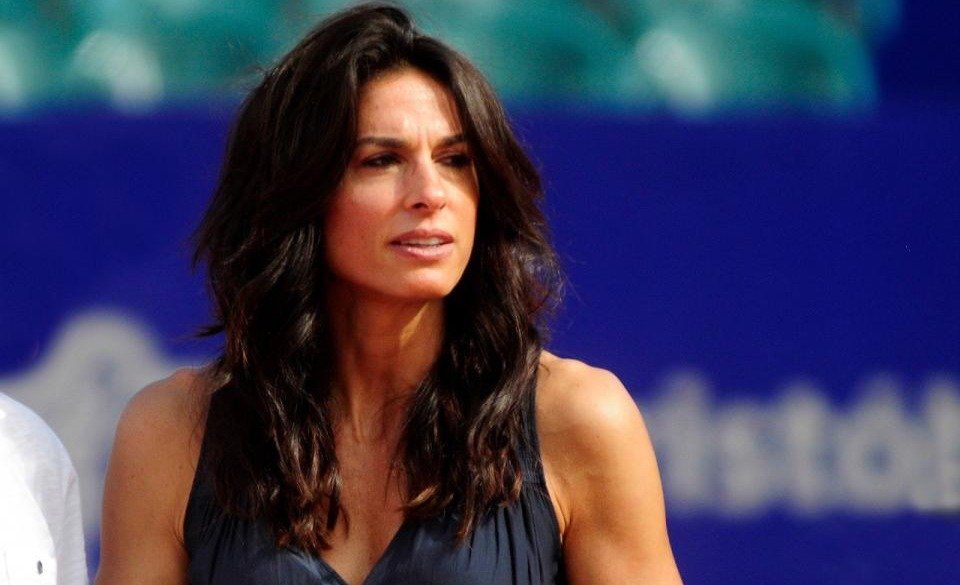
In the autumn of 1996, Gabriela Sabatini found herself at a well-known venue – New York’s Madison Square Garden, to deliver an unexpected announcement. At the age of 26, with an impressive tally of 27 career singles titles and nearly $9 million in prize earnings, the Argentine legend and 1990 U.S. Open champion decided to retire from tennis permanently. The decision left the tennis community in a state of bewilderment.
Watch What’s Trending Now!
How could an athlete, at the peak of her powers and beloved worldwide, come to the conclusion that she had reached her limit? Years later, as reported by ESPN, reflecting on that moment with a perspective that only time can afford, Sabatini provided a candid insight. “I couldn’t take it anymore,” she confessed.
However, the source of her exhaustion wasn’t her body. Sabatini added, “At 26, I was physically in great shape. I had already been processing it. I think this started maybe in ’94, two years earlier, let’s say. That’s when I started working with a sports psychologist, with whom I had already worked, to see what was happening to me”
ADVERTISEMENT
“Because, I don’t know if it happened to you, but you feel like you’re hitting a rough patch and you say, ‘I don’t want to play, I don’t want to be in here,’ and it’s like everything is the same to you and I wasn’t motivated to be there,” she said.
This was not an unfamiliar moment for Sabatini; it resonated like a haunting echo from the past. The same sense of emptiness first enveloped her at the age of 17, a prodigy who had turned professional at 14 and swiftly captured the admiration of the sports world.
Imago
Credits – Instagram / @tennishallofame
“This happened to me when I was 17. I felt like I didn’t want to play tennis anymore. I didn’t want to do this anymore. That happened, I got hooked again, excited again, and then the same thing happened to me again. So I said, ‘It’ll be that again,’ and that’s when I started working with a psychologist. And that’s when I realized it was the end,” she disclosed.
ADVERTISEMENT
“I don’t know if it’s tennis, the sport itself, no. I think it’s everything around it, which leads you to a situation of knowing how to handle fame, the press, the demands, the expectations. You don’t realize it, but there comes a point when all of that starts to burn you up.”
ADVERTISEMENT
Her career stands as a compelling testament to this internal conflict. Long before she stepped away from her career, the relentless glare of the spotlight significantly hampered her ability to perform.
Tennis had become a living nightmare for Gabriela Sabatini
Gabriela Sabatini once revealed that during her youth, the anxiety surrounding mandatory press conferences following victories was so overwhelming that she would intentionally lose in the semifinals in order to avoid them. “It was that bad!” she said.
ADVERTISEMENT
The refusal to embrace the spotlight may have hindered her ascent to greater heights; Sabatini herself claimed that her fame served as an obstacle to achieving the top ranking.
“I think my fame and my public profile had something to do with the fact that I did not become No. 1. To be so famous would also have been a problem if I had been No. 1,” she confessed.
Top Stories
Roger Federer Draws Criticism from Swiss Government Chief for Tourism Boom in Country
Stefanos Tsitsipas Considered Quitting Tennis After Major Personal Setback
Carlos Alcaraz Gets Harsh Reality Check After Father’s Reported Role in Juan Carlos Ferrero Split
45-Year-Old Venus Williams Receives 2026 Australian Open Wildcard Entry
Why Carlos Alcaraz Might Not Win the Australian Open in 2026?
The Argentine characterized life on tour as a “bubble,” a repetitive cycle of practice, eating, sleeping, and packing, where forming friendships becomes nearly impossible in such a transient and individualistic setting.
ADVERTISEMENT
The isolation was made worse by her own shyness, and the troubling nature of fame became so overwhelming that she resorted to wearing a wig in public to avoid recognition.
“My friends would go out late but I had to eat early and go to bed. I couldn’t hang out, go to a movie or get up late,” she explained. By 1996, the enthusiasm that had driven her since her youth had entirely vanished, leading her to the conclusion that it was time to withdraw from the sport.
ADVERTISEMENT
ADVERTISEMENT
ADVERTISEMENT
