
Imago
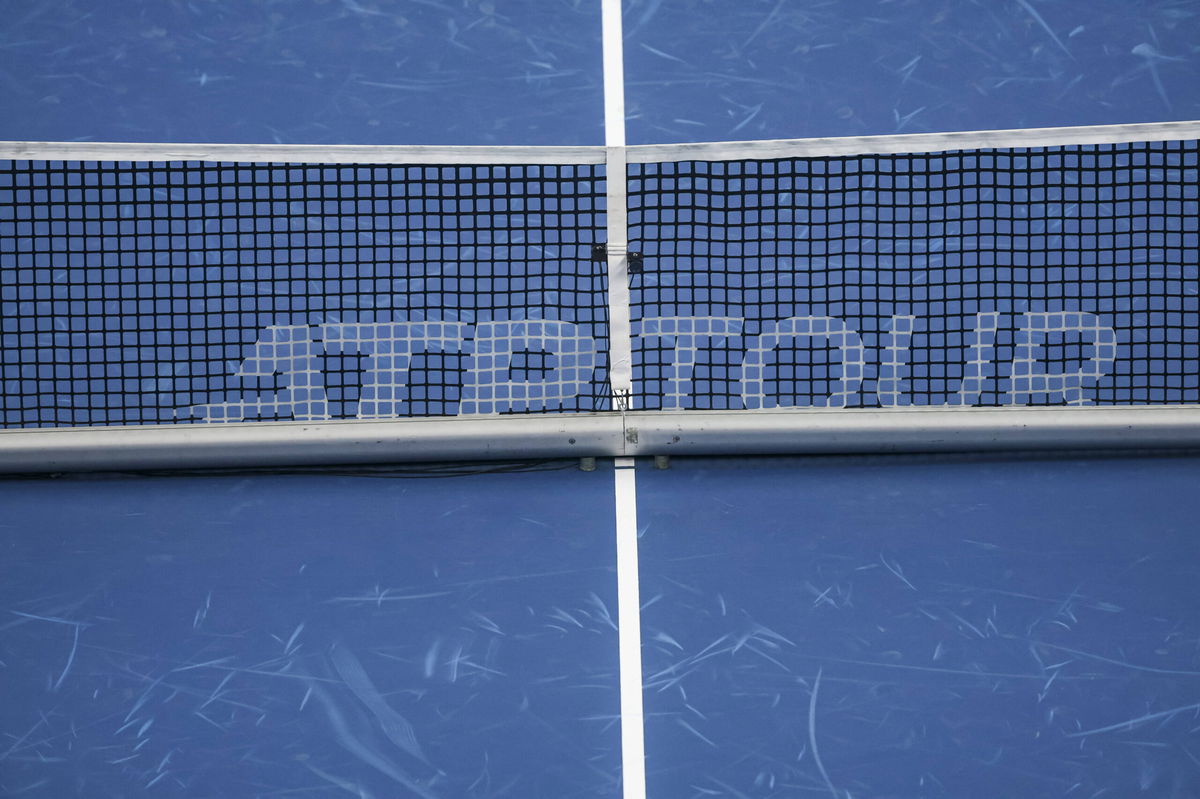
European Open ATP, Tennis Herren Tennis Tournament ATP TOUR logo inscription displayed on the net of the central court during a quarter semi final tennis match of the singles competition at the ATP 250 European Open Tennis tournament in Lotto Arena, Antwerp, Belgium on October 18, 2024. Antwerp Belgium PUBLICATIONxNOTxINxFRA Copyright: xNicolasxEconomoux originalFilename:economou-notitle241018_np70m.jpg
Imago
European Open ATP, Tennis Herren Tennis Tournament ATP TOUR logo inscription displayed on the net of the central court during a quarter semi final tennis match of the singles competition at the ATP 250 European Open Tennis tournament in Lotto Arena, Antwerp, Belgium on October 18, 2024. Antwerp Belgium PUBLICATIONxNOTxINxFRA Copyright: xNicolasxEconomoux originalFilename:economou-notitle241018_np70m.jpg
Remember the 2025 Shanghai Masters? The heat was brutal, the humidity was relentless, and the world’s top players were pushed to their limits. The conditions sparked a wave of complaints and even forced some players to pull out. “The mistake was mine: the heat and humidity got me down,” Jannik Sinner admitted after spending two and a half exhausting hours under the Shanghai stadium lights against Tallon Griekspoor.
Watch What’s Trending Now!
Cramps, fainting spells, a string of withdrawals throughout the event, and raw images of players in clear distress finally pushed the ATP to act, rolling out new measures aimed at easing the toll of extreme heat. And now, it appears the ATP Board of Directors has officially approved the implementation of a new heat rule set to take effect starting with the 2026 season. So what’s in the provision, you ask?
For singles matches, the ATP’s new heat measures are designed to give players real relief when conditions become dangerous. Cooling breaks will now be part of the match, and if a contest goes to a third set, players can take a 10-minute break after the second set ends to recover.
ADVERTISEMENT
Matches will also be automatically stopped once the WBGT index (which factors in heat, humidity, and solar radiation) climbs above 32.2°C, as soon as one player requests it, and the rule then applies to both competitors. But for how long does the break last, and what can players actually do during it?
The ATP Board of Directors approved implementation of a new heat rule effective from 2026 season. Key provisions:
•Cooling breaks to be introduced
•A 10-minute break after 2nd set will be permitted if requested by either player
•Play will be suspended when WBGT exceeds 32.2°C pic.twitter.com/MMyhtydmNP— Parsa (@Parsa_Nemati) December 15, 2025
The answer is clear and structured. The break lasts “10 minutes total from final point to start of the next set,” giving players a defined window to reset physically. During that time, athletes are allowed to shower, change clothes, use cooling methods, hydrate, and even receive coaching, all aimed at safely lowering body temperature before play resumes. Moreover, these breaks won’t be left to guesswork either.
ADVERTISEMENT
ATP medical staff will oversee the recovery process, monitoring hydration and overall condition. According to tracking data, the break has proven effective, with players seeing an average “0.5 to 0.7°C drop in core temperature” after the 10-minute cooling period, reinforcing why the rule is being formally adopted. Doubles matches, however, will follow a different approach.
There will be no formal cooling break between sets, but if the WBGT reaches 31°C or higher, players will be allowed an extended 90-second hydration period during changeovers. It’s a lighter adjustment, reflecting the different physical demands of doubles play, but still acknowledges the risks posed by extreme heat.
ADVERTISEMENT
Beyond individual matches, the ATP has also outlined a full suspension protocol for outdoor courts. If the WBGT stays at or above 32.2°C for 15 minutes, play will be halted across all outdoor courts at the same time.
Matches will finish the current game or tiebreak before stopping, players will be sent to cooling areas or locker rooms, and medical monitoring will continue while outdoor practice is suspended. Play will only resume once the WBGT drops below 30.5°C for at least 20 minutes and officials give the green light to restart.
However, while players taken issue with the heat and scheduling, especially at tournaments like this year’s Shanghai Masters, David Goffin has a different opinion.
ADVERTISEMENT
David Goffin shrugs off ATP calendar criticism
A few months ago, David Goffin openly questioned the conditions players faced late in the season, pointing to extreme heat, heavy humidity, and longer rallies as major factors. He explained that, “The top 10 players often go far in tournaments so they play a lot. And when the end of the season comes, with this special tournament, played in temperatures almost 35 degrees (unheard of), and with a humidity level of 80%, it’s extremely tough.”
Still, Goffin noted that the tour has always stretched from January to November, adding that players ultimately manage their schedules themselves, but the debate over whether that’s enough protection quickly followed.
ADVERTISEMENT
That discussion grew louder when talk of “slowed down courts” surfaced. Roger Federer suggested that some tournaments might be adjusting surfaces to help stars like Jannik Sinner and Carlos Alcaraz reach the later rounds and generate buzz.
Top Stories
Tennis World Grieves After Tragic Incident at Bondi Beach, Australia

Stefanos Tsitsipas Breaks Silence As Family Twist Emerges in Serious Off-Court Drama

Nick Kyrgios’ Australian Open Wildcard Hangs in the Balance as Uncertainty Looms Large

Novak Djokovic Makes a Bold Coaching Move As He Looks the Challenge Carlos Alcaraz & Jannik Sinner in 2026

Alexander Zverev echoed the concern, even as he exited early with a Round of 32 loss to eventual finalist Arthur Rinderknech. Sinner, however, firmly dismissed the speculation, saying neither he nor Alcaraz had any influence over court speeds or tournament decisions.
Meanwhile, the toll of the conditions became impossible to ignore. Goffin and Sinner weren’t alone, as players like Tomas Machac, Casper Ruud, Hamad Medjedovic, Terence Atmane, and Wu Yibing were all forced to retire due to the heat. Others who stayed on court still voiced frustration, openly criticizing the ATP for failing to apply a heat rule similar to the one long used by the WTA, reigniting calls for stronger player protections.
ADVERTISEMENT
That said, did the Shanghai heat expose long-standing flaws in how the ATP protects players during extreme conditions? And most importantly, are cooling breaks and suspensions enough, or has the ATP acted too late to address player safety?
ADVERTISEMENT
ADVERTISEMENT
ADVERTISEMENT
