

Imago
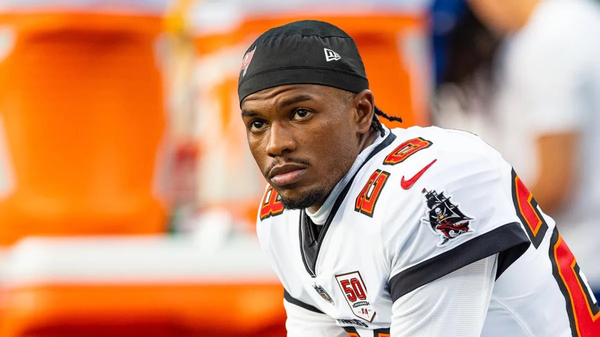
NCAA, College League, USA Football: Big 12 Media Days Jul 10, 2024 Las Vegas, NV, USA Colorado Buffaloes safety Shilo Sanders speaks to the media during the Big 12 Media Days at Allegiant Stadium. Las Vegas Allegiant Stadium NV USA, EDITORIAL USE ONLY PUBLICATIONxINxGERxSUIxAUTxONLY Copyright: xCandicexWardx 202407010_jhp_wb4_0182
Imago
NCAA, College League, USA Football: Big 12 Media Days Jul 10, 2024 Las Vegas, NV, USA Colorado Buffaloes safety Shilo Sanders speaks to the media during the Big 12 Media Days at Allegiant Stadium. Las Vegas Allegiant Stadium NV USA, EDITORIAL USE ONLY PUBLICATIONxINxGERxSUIxAUTxONLY Copyright: xCandicexWardx 202407010_jhp_wb4_0182
A court-appointed trustee and Shilo Sanders’ legal team are now locked in a dispute over a quarter-million dollars, a fight that could define the Colorado star’s financial future. More than two years ago, the son of Colorado coach Deion Sanders filed a petition for bankruptcy with around $11 million in debt. Then, in October, the court-appointed trustee accused Sanders of a major violation, only for his attorney, Keri Riley, to fire back recently.
Watch What’s Trending Now!
As per USA Today, Riley recently filed a response asking the bankruptcy court to dismiss trustee David Wadsworth’s complaint against her client. Wadsworth had accused Shilo Sanders of violating bankruptcy law by moving around $250,000 through Big 21, one of his companies. But according to Riley, the trustee has misunderstood the entire situation.
“All of the funds paid into, and subsequently out of Big 21 post-petition were post-petition earnings of the Debtor,” said Shilo Sanders’ attorney in the recent court filing. “The Trustee acknowledges in the Complaint that the Debtor was earning money from NIL Deals both pre- and post-petition. As evidenced by the allegations in the Complaint, the NIL Deals were and are the Debtor’s primary source of income.”
ADVERTISEMENT
Imago
Social media: X
So, Shilo Sanders’ attorney argued that the money Wadsworth had targeted came from Shilo Sanders’ NIL deals – earnings he secured after he filed for bankruptcy. He made that money through Big 21 LLC and Headache Gang LLC, two companies he formed to manage his brand. The attorney also claimed that these companies are separate from the bankruptcy estate. So, in her view, the trustee never had the right to touch that money in the first place.
But Wadsworth sees things differently. He has argued that Shilo Sanders transferred approximately $250,000 that legally belonged to the bankruptcy estate once the case began. By moving that money, he stated, Shilo violated the automatic stay – a key rule that prevents debtors from using or shifting assets during a bankruptcy case. In other words, if the money should have been under the trustee’s control, Shilo had no right to move it.
ADVERTISEMENT
This dispute raises a big question: When is NIL income considered part of a bankruptcy estate? The law says trustees can collect a debtor’s assets and pre-filing earnings. But trustees cannot collect the money the debtor earns after filing. So the judge must now decide whether Wadsworth has even made a strong enough argument to move forward.
If the judge agrees with Riley, Shilo Sanders will not have to return the $250,000. If the judge sides with Wadsworth, the complaint will move toward trial. But this issue is only one piece of Sanders’ broader legal battle.
ADVERTISEMENT
What does this development mean for Shilo Sanders’ bankruptcy case?
Besides the trustee’s complaint, there are two more cases still active in bankruptcy court against Shilo Sanders. One of them involves a massive $11.89 million judgment against him. That judgment stems from a 2015 incident in which Shilo allegedly misbehaved with a high school security guard, John Darjean. The guard later required spinal surgery with the injuries. But the case became even more damaging for Shilo when he failed to appear at the 2022 trial.
𝗕𝗥𝗘𝗔𝗞𝗜𝗡𝗚: Shilo Sanders’ NIL earnings have been called into question after declaring bankruptcy, per @denverwestword
He’s facing a $11.89M lawsuit alleging he attacked a security guard at a Texas high school in 2015. pic.twitter.com/xDOjTXTCRQ
— Dov Kleiman (@NFL_DovKleiman) May 24, 2024
ADVERTISEMENT
Shilo Sanders’ absence in court made him automatically liable for the full amount. Now the bankruptcy court must decide how to treat Sanders’ debt. Will the court allow it to be wiped out? Or will it rule that the nature of the injury makes the debt non-dischargeable? The answer could completely shape Sanders’ financial future.
On top of that, a law firm has sued Shilo Sanders for more than $164,000 in unpaid legal bills tied to the bankruptcy case and the injury lawsuit. It’s another heavy financial blow for someone who no longer has an NFL contract. The Tampa Bay Buccaneers waived him, and he is currently trying to convince the court he simply doesn’t have the money to cover these massive debts.
Moreover, what is clear now is that the outcome of the trustee’s complaint could set the tone for the rest of the bankruptcy case. If Shilo Sanders keeps the $250,000, he gets some breathing room. If he loses, the financial pressure increases dramatically. Either way, the judge’s upcoming decision will play a major role in determining whether Sanders can climb out of this financial crisis.
ADVERTISEMENT
ADVERTISEMENT
ADVERTISEMENT
ADVERTISEMENT
