Getty
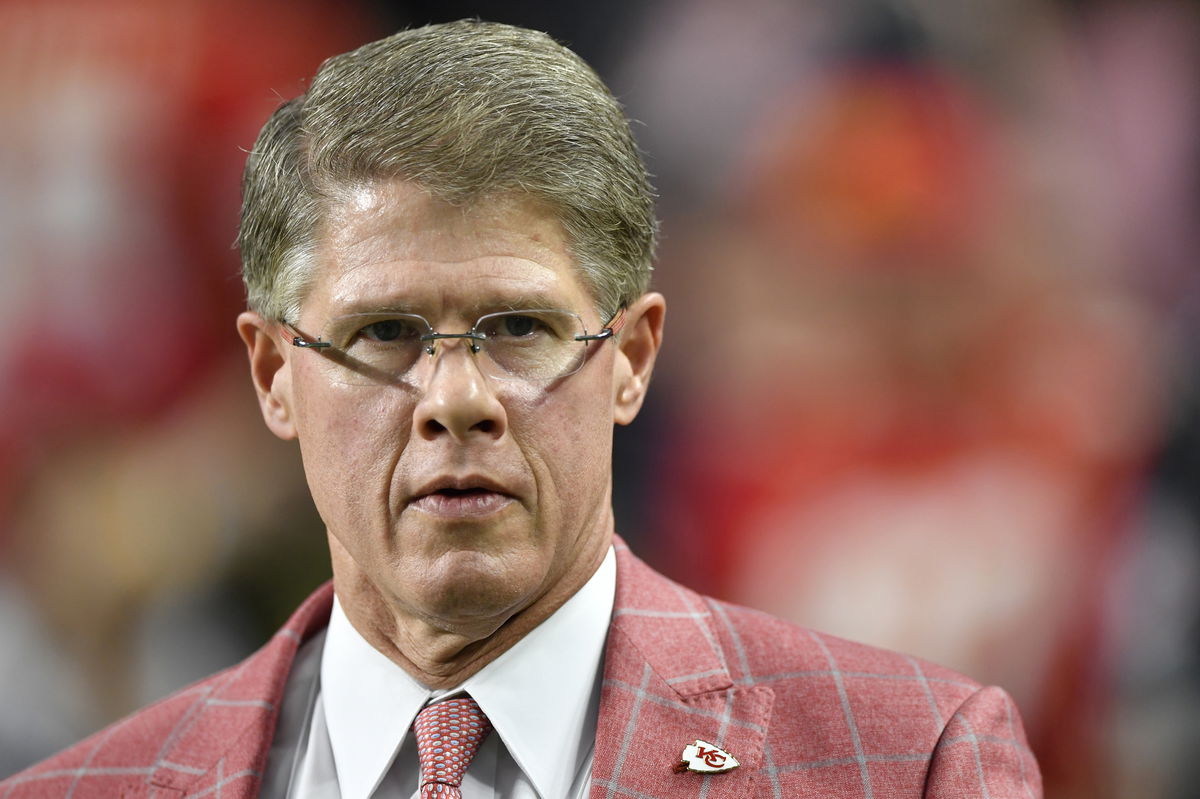
LAS VEGAS, NEVADA – NOVEMBER 14: Kansas City Chiefs Part Owner Clark Hunt walks onto the field before a game against the Las Vegas Raiders at Allegiant Stadium on November 14, 2021 in Las Vegas, Nevada. The Chiefs defeated the Raiders 41-14. (Photo by Chris Unger/Getty Images)
Getty
LAS VEGAS, NEVADA – NOVEMBER 14: Kansas City Chiefs Part Owner Clark Hunt walks onto the field before a game against the Las Vegas Raiders at Allegiant Stadium on November 14, 2021 in Las Vegas, Nevada. The Chiefs defeated the Raiders 41-14. (Photo by Chris Unger/Getty Images)
The Kansas City Chiefs are looking for a new place to call home, at least for their Monday through Friday grind. Owner Clark Hunt has his eyes set on a $300 million vision to move the team’s corporate headquarters and practice facilities in Olathe. But this dream is far from a done deal. This week, the plan faces its biggest challenge yet.
Watch What’s Trending Now!
A City Council vote that will decide the fate of the project for the next 30 years.
This gives residents a chance to weigh in on whether a 30-year tax commitment is the right move for the community or simply a play they should pass on. That’s where things get tricky for the Chiefs.
ADVERTISEMENT
If the council votes “No” or delays the project, Hunt’s ambitious plans could be derailed.
After spending over half a century at Arrowhead, Hunt has been thinking about the Chiefs’ next chapter. He envisions a “state-of-the-art” complex that would cost $3 billion in total. However, at present, according to the latest documents, the plan includes the Chiefs’ corporate offices and a world-class indoor and outdoor training complex for the players.
This is a game-changer for Kansas.
Our agreement with the @Chiefs delivers a $3B stadium in Wyandotte County, a new HQ in Olathe, 20,000+ construction jobs, a $4.4B economic impact, and $1.06B annually once open — all with no new taxes or state budget dollars.
— Governor Laura Kelly (@GovLauraKelly) December 22, 2025
ADVERTISEMENT
.png)
.png)
.png)
While the city hasn’t finalized the exact economic impact numbers, the physical construction alone is estimated at $300 million. To fund that, the city is looking at STAR Bonds, where the city or state issues a bond, more like taking out a loan, to pay for a major project upfront.
The question at the moment for the folks of Olathe is repayment of STAR Bonds.
ADVERTISEMENT
The city of Olathe isn’t just letting the state handle this; they are being asked to “pledge” three specific local taxes for repayment. The tax would be sourced from:
- 1% General Sales Tax: Every dollar spent on merchandise or services at the site.
- 0.5% Country Sales Tax: Olathe’s portion of the Johnson County sales tax collected at the site.
- Transient Guest Tax: A portion of the 9% tax on sleeping accommodations built on the property.
The site in question here is the 165-acre site at College Boulevard and Ridgeview Road. If the folks pledge these, the tax money won’t go into the city’s general fund for police, roads, or parks; instead, it will go directly toward paying off the Chiefs’ $300 million facility. The pledge would remain effective for 30 years.
ADVERTISEMENT
The City Council is legally required to give the citizens a “say” before committing local tax dollars for 30 years. That’s why they are holding this public hearing before the final vote.
At present, the city is trying to reassure the residents that this deal won’t drain money from existing city services. The project won’t touch the protected funds (approved by voters for the city’s special needs), only taxes collected inside the designated site.
For this tax deal to actually happen, it’s a requisite that the Chiefs must build the headquarters and practice fields in the specific Olathe spot. And more importantly, the financial bonds must be officially issued by December 31, 2030.
ADVERTISEMENT
If these things don’t occur, the agreement expires.
Chiefs predict a speed-run repayment
Interestingly, the released ordinance doesn’t mention the earlier lavish proposal. Ones that Olathe Mayor John Bacon, as well as Chiefs officials, described as a “Village West” style area with shops and restaurants, and a new stadium for the Olathe Public Schools.
ADVERTISEMENT
The Chiefs are extremely confident in this early strategy, believing that the revenue generated will be so strong that the stadium’s construction funds borrowed from STAR Bonds could be fully paid off in just 15 years. That’s half the time originally allowed.
“If you look at that region and you look back at its historic growth rates and you consider this region should grow faster because of all that economic activity that we’re putting into it,” said team attorney Korb Maxwell. “That’s how I make my projection that this has the ability to and should pay off in under 15 years.”
Top Stories
Michael Strahan Confirms Stance on Retirement from FOX While Announcing Future Plans

Bills Make Final Decision on Firing Sean McDermott’s Staff as Joe Brady Demands Major Changes From Josh Allen & Co.

NFL Legend Charles Tillman Opens Up on Resigning From FBI After Unethical ICE Raids

Giants Co-Owner Steve Tisch Issues Public Statement After Being Named In Jeffrey Epstein Files


USA Today via Reuters
NFL, American Football Herren, USA Houston Texans at Kansas City Chiefs, Sep 10, 2020 Kansas City, Missouri, USA A member of security waits or fans to enter the stadium before the game between the Houston Texans and the Kansas City Chiefs at Arrowhead Stadium. Mandatory Credit: Jay Biggerstaff-USA TODAY Sports, 10.09.2020 17:40:25, 14903436, NPStrans, NFL, Kansas City Chiefs, Arrowhead Stadium, Houston Texans, TopPic PUBLICATIONxINxGERxSUIxAUTxONLY Copyright: xJayxBiggerstaffx 14903436
However, the local economists believe the Chiefs’ promise of repayment is a bit exaggerated. According to them, the 30 years seem more “realistic.” Certainly, the project would allure tourists, but it wouldn’t suddenly become Allegiant Stadium in Las Vegas.
ADVERTISEMENT
According to a Kansas economist and founder of Knowledge and Decisions Economic Consulting, Michael Austin, the only way to generate enough funds to settle the $300 million debt in half the time would be by using “hidden costs.”
“That’s because you either draw a STAR bond district that is so big that it encompasses an entire county, which means it siphons off tax revenue from Walmarts and gas stations, places that have nothing to do with football,” Austin explained. “Or you can set a baseline that is so far back enough in time that today’s normal sales could suddenly be counted as new.”
ADVERTISEMENT
What makes Austin’s analysis solid is the proposed zone for the project, which covers all of Wyandotte County and a huge chunk of Johnson County. That goes substantially beyond the actual 165-acre practice site.
ADVERTISEMENT
ADVERTISEMENT
ADVERTISEMENT
Related Newsletters