
Imago
Credits: Imago
Imago
Credits: Imago
Watch What’s Trending Now!
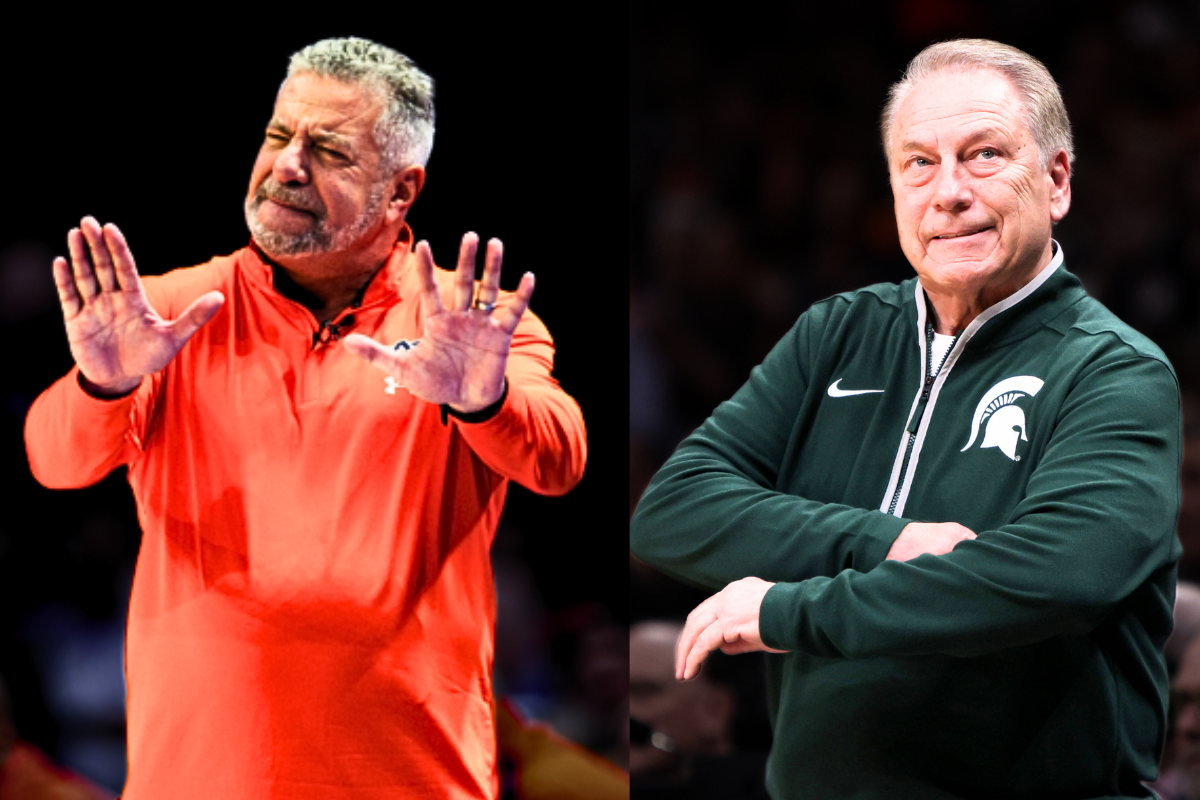
Midseason additions are quickly becoming college basketball’s latest pressure point. With programs like Baylor bringing in James Nnaji, Louisville adding London Johnson, and Trentyn Flowers potentially next in line, the trend of NBA-experienced players entering the college game is gaining real traction. Tom Izzo has already voiced his frustration, and now former coach Bruce Pearl is weighing in on a debate that many believe is pushing the sport toward uncomfortable territory.
ADVERTISEMENT
“Coach Izzo isnt just blaming Scott or other Coaches here, clearly our rules and guidelines are broke. Decisions are not based on best interests of student athletes and intercollegiate athletics, but on losing lawsuits. I don’t think Congress will fix our problem, so we must!” clarified Bruce Pearl, highlighting that there was a bigger threat at play.
On Christmas Eve, Baylor made waves by adding James Nnaji, the No. 31 overall pick in the 2023 NBA Draft. Nnaji had been playing professionally overseas and was fully on the pro track before suddenly being cleared to play for the Bears. He had logged minutes in the NBA Summer League, competed in Europe, and checked nearly every box of the professional pipeline.
ADVERTISEMENT
Still, because he never signed an NBA contract or appeared in an NBA or G League regular-season game, the NCAA ruled that he could play and granted him four full years of eligibility. That decision led to a jarring reality. A 7-foot, 250-pound pro prospect with a 7-foot-7 wingspan will now be lining up against college players midway through the season.
It was in this context that Tom Izzo spoke up. He acknowledged that he did not have every detail and said he reached out to his “good friend” and Baylor head coach Scott Drew to better understand the situation. Even so, Izzo raised serious concerns about what this ruling could open the door to. He openly wondered what would stop him from calling up Miles Bridges, or even Magic Johnson or Gary Harris, and asking if they wanted to come back and play in East Lansing.
ADVERTISEMENT
“But what I’m hearing and now, we’re taking guys that were drafted in the NBA and everything. I said it to you a month and a half ago, ‘Come on, Magic and Gary. Let’s go, baby. Let’s do it.’ Why not?” Izzo said, adding, “If that’s what we’re going to, shame on the NCAA. Shame on the coaches, too”.
And as Pearl noted, Izzo wasn’t purely taking an aim at Drew or other coaches in general.
“But shame on the NCAA because coaches are going to do what they’ve got to do, I guess. But the NCAA’s the one. Those people on those committees that are making those decisions to allow something so ridiculous,” Izzo had added.
ADVERTISEMENT
Izzo had also pointed to another consequence he believes is coming next. He warned that decisions like these will end up pushing more coaches out of the college system altogether, further destabilizing a landscape that already feels shaky.
“Has anybody looked up? It already has,” Izzo said.
ADVERTISEMENT
Yet, then came Trentyn Flowers. Flowers suited up in an NBA game just three weeks ago and could now be headed to college basketball. According to Joe Tipton of On3, multiple programs are already showing interest in bringing him in. Understandably, that report sent the backlash into overdrive.
ADVERTISEMENT
So, clearly,
what Pearl and Izzo are trying to say is that the NCAA’s rules system is broken.Well, this trend is largely the result of how the NCAA’s idea of amateurism has loosened as college athletes have gained real economic freedom. The gap between professional and college players has narrowed significantly, especially after the NCAA allowed athletes to profit from NIL deals and the House settlement opened the door for direct revenue sharing between schools and athletes.
For years, the NCAA took a hard line against eligibility for anyone who had been paid to play. In 2000, it ruled Nigerian center Muhammed Lasege permanently ineligible at Louisville because he had signed a $9,000 contract with a Russian professional team. About a decade later, projected lottery pick Enes Kanter was also permanently barred from playing at Kentucky after receiving $33,033 from his Turkish club, money the NCAA said exceeded what it considered “actual and necessary” expenses.
In today’s NIL-driven landscape, those rulings likely would not land the same way.
From the NCAA’s point of view, however, the rulebook itself has not changed in any meaningful way. What has shifted is how aggressively schools are now recruiting these types of players and how open the players themselves are to choosing the college path.
That evolution has sparked bigger questions about whether the current system still makes sense at all, and whether college basketball and the NBA need a new model. Some have pointed to hockey as a possible template, where players can be drafted but still develop in college until they are truly ready to turn professional.
No one knows what will happen next or how many other professional players will make their way to college basketball. And yet, even as criticism grows louder, Scott Drew has stepped in to defend Baylor and give an answer to Izzo.
Scott Drew Gets Candid On His Conversation With Tom Izzo
Baylor head coach Scott Drew pushed back on the criticism surrounding the addition of former NBA draft pick James Nnaji on Sunday, explaining that he is simply navigating the current landscape of college basketball and making decisions he believes help Baylor compete.
Drew said that this season has already seen multiple international players who entered the NBA draft but were not selected end up on college rosters. He also pointed to Kansas State women’s basketball player Nastja Claessens, a 2024 WNBA draft pick who is still playing at the collegiate level, as another example of how the lines are shifting.
“I just know they told us he can play, so I’m happy,” Drew said.
Drew then added that he has spoken directly with Tom Izzo and stood by his decision.
Imago
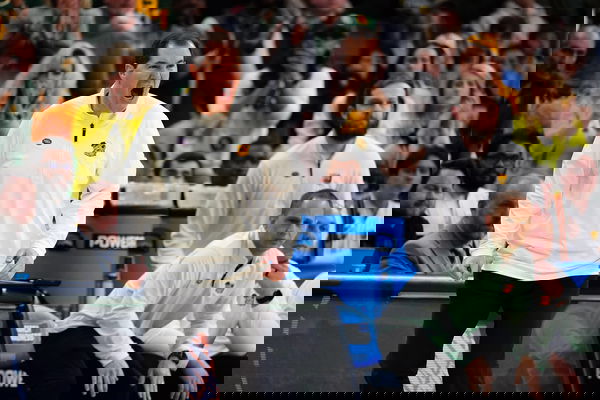
NCAA, College League, USA Basketball: NCAA Tournament Second Round-Baylor vs Clemson Mar 24, 2024 Memphis, TN, USA Baylor Bears head coach Scott Drew reacts against the Clemson Tigers in the first half in the second round of the 2024 NCAA Tournament at FedExForum. Memphis FedExForum TN USA, EDITORIAL USE ONLY PUBLICATIONxINxGERxSUIxAUTxONLY Copyright: xJohnxDavidxMercerx 20240324_lbm_sx1_036
“Coach Izzo and I are friends. I’ve got a lot of respect for him. Great conversation,” Drew told reporters. “As he said, most coaches are 99% aligned on things that we would like to see done with our game. At the same time, from my knowledge, until we get to collective bargaining, I don’t think we can come up with rules that are agreeable or enforceable. Until that, I think all of us have got to be ready to adjust and adapt to what’s out there.
“Early on, when it first came out with G League players, I wasn’t in favor of that either. But again, we don’t make the rules and as we find out about things, we’re always going to adapt to put our program in the best position to be successful, because that’s what we get paid to do.”
Even so, the response sparked fresh backlash. Many fans felt Drew sidestepped the larger issue at hand. The concern is that moves like this set a precedent that stretches far beyond one roster decision. What began with overseas professionals joining college teams has now grown to include former G League players and NBA draft picks, leaving people to wonder what the next step is and whether there is any clear stopping point at all.
ADVERTISEMENT
ADVERTISEMENT
ADVERTISEMENT
ADVERTISEMENT
ADVERTISEMENT
