
Imago
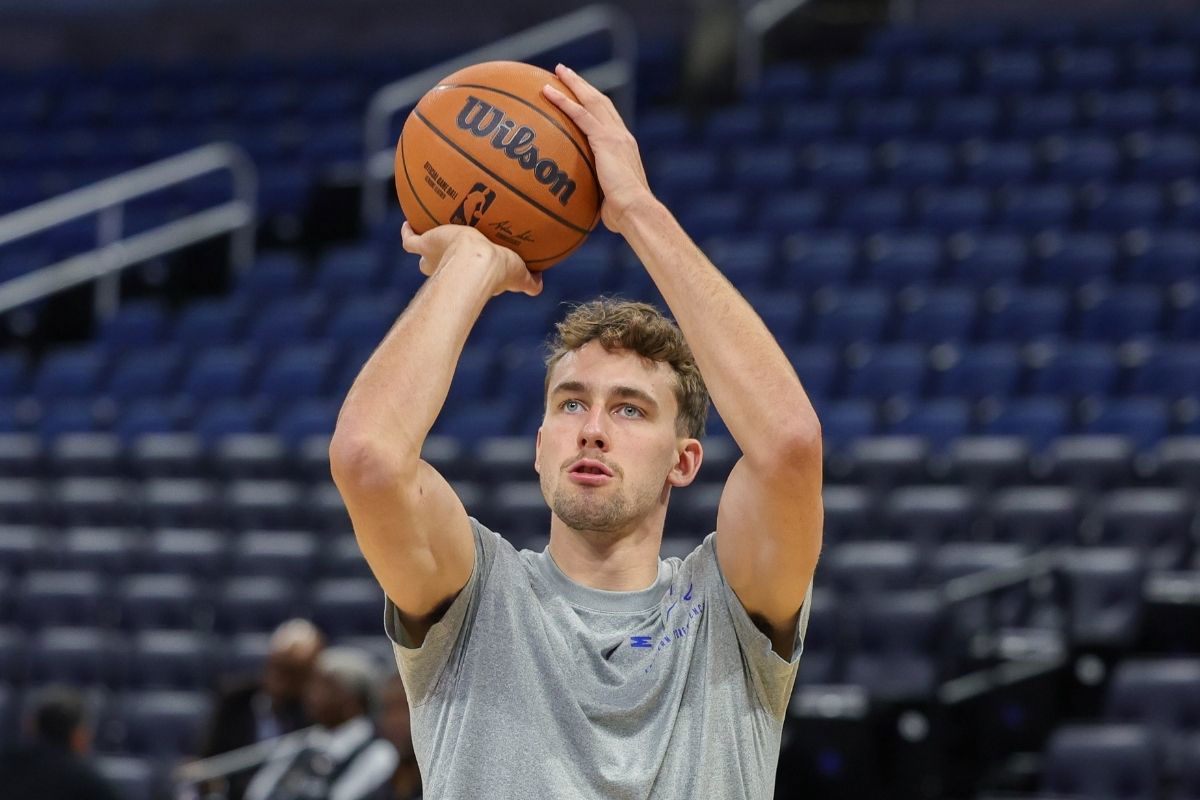
Nov 10, 2024; Orlando, Florida, USA; Orlando Magic forward Franz Wagner (22) warms up before the game against the Washington Wizards at Kia Center. Mandatory Credit: Mike Watters-Imagn Images
Imago
Nov 10, 2024; Orlando, Florida, USA; Orlando Magic forward Franz Wagner (22) warms up before the game against the Washington Wizards at Kia Center. Mandatory Credit: Mike Watters-Imagn Images
The Orlando Magic avoided the worst-case scenario, and that alone shifts the tone of their season. What looked like a season-altering collapse at Madison Square Garden on December 7 has now been clarified as a high left ankle sprain, offering the franchise a path forward rather than a full derailment.
Watch What’s Trending Now!
The team announced on December 8 that MRI scans showed no fractures or ligament tears. That clarity reframes Orlando’s concerns. The focus now transitions from fear of long-term absence to figuring out how the Magic survive without one of their most valuable offensive engines for the next stretch of games.
With Franz Wagner expected to miss roughly 2 to 4 weeks, Orlando’s playoff aspirations hinge on how quickly he responds to treatment and how effectively the Magic reconfigure an offense that leans heavily on his creation. It is a manageable injury, but it arrives at a moment where Orlando’s margin for error is razor thin.
ADVERTISEMENT
The moment unfolded in the first quarter of the Magic’s 106-100 loss to the New York Knicks. Wagner elevated for a lob attempt from Jalen Suggs but was forced into an awkward landing. His left ankle twisted sharply as he came down, prompting immediate distress and a quick trip to the locker room. Before exiting, he had already produced seven points on 3-for-4 shooting, signaling another efficient scoring night ahead.
Orlando Magic star Franz Wagner has sustained a high left ankle sprain, sources tell ESPN. Typically an injury like this has a timeframe of 2 to 4 weeks. Overall, tremendous results after MRI today showed no structural damage on his left leg. pic.twitter.com/4mECcVSxXM
— Shams Charania (@ShamsCharania) December 8, 2025
The Magic initially listed the injury only as a lower left leg issue, creating uncertainty around the knee and ankle. That speculation was erased after Sunday’s imaging, but the classification matters. High ankle sprains, unlike low sprains, impact the syndesmotic ligaments above the joint. They restrict rotational stability, which is a core part of Wagner’s movement patterns as a 6-foot-10 wing who relies on change-of-direction drives.
ADVERTISEMENT
High ankle sprains generally fall between mild and moderate grades unless tearing is visible. Wagner’s case aligns with a moderate sprain where rehab emphasizes swelling reduction, mobility restoration, and controlled lower-body loading. Historical NBA data supports a broad range of 2 to 8 weeks, but younger players with clean imaging trend toward the shorter end.
Analytical comparisons give Orlando more optimism. Stephen Curry returned from a Grade 2 sprain in 2016 within two weeks. Ja Morant recovered from a similar sprain in 2022 in just over that window. LeBron James required closer to a month in 2021 despite initial hopes of a quicker return. In all cases, acceleration tests and single-leg stability work were the final clearance markers.
ADVERTISEMENT
For Wagner, the Magic’s training staff is expected to begin Phase 2 mobility drills within days. If inflammation reduces quickly, the window around December 28 to early January becomes realistic. Any setbacks in lateral movement drills typically extend rehab by another week.
Why Wagner’s absence hits Orlando so hard
Before the injury, Franz Wagner was delivering the best basketball of his career. Through 24 games, he averaged 22.7 points, 6.1 rebounds, and 3.7 assists while shooting 49 percent from the field. Advanced metrics underscore his impact. His +5.2 net rating jumps to +8.1 in clutch minutes, and he accounted for nearly 28 percent of Orlando’s assisted scoring sequences through drive-and-kick actions.
ADVERTISEMENT
The Knicks game reflected Orlando’s immediate offensive limitations without him. The Magic shot 36-for-94 from the field and 12-for-42 from three, their spacing visibly tightening as the Knicks loaded up on Paolo Banchero. Wagner’s pull-up shooting and secondary ball-handling have been Orlando’s antidote to scoring droughts. Removing that element forces players like Jalen Suggs and Cole Anthony into higher usage roles than their natural profiles warrant.
Orlando’s season profile also magnifies the pressure. At 14-10, the Magic sit seventh in the East and third in the Southeast Division. Their defense remains elite, holding teams to 104.8 points per 100 possessions, but their offense ranks bottom eight. Without Wagner, the lineup efficiency drops into negative territory over the last two seasons’ samples. That swing can cost a team one to two wins over a month, which in the East can mean falling from sixth to tenth by New Year’s Day.
Top Stories
Sophie Cunningham’s Sharp Response Divides WNBA Fans Amid Caitlin Clark’s Project B Decision

Steve Kerr Sends Blunt Message to Jonathan Kuminga After Benching Him vs Bulls
LeBron James Ends 8-Year Philly Curse With Dagger as Fans Spot ‘Spider Attack’
Did Lakers Sign Chris Paul to a Season-Long Deal? Fact-Checking Viral Claim
Are Dillon Brooks, Anthony Edwards Playing Tonight? Suns vs. Timberwolves Latest Injury Report (Dec. 8)

Head coach Jamahl Mosley will likely elevate Suggs into a heavier on-ball role, supported by Anthony’s bench scoring and rookie Tristan da Silva’s wing versatility. Anthony Black may also see expanded minutes in hybrid guard-forward alignments. Mosley hinted at resilience in his postgame message, emphasizing defensive continuity while acknowledging the creative void Wagner leaves.
ADVERTISEMENT
Imago
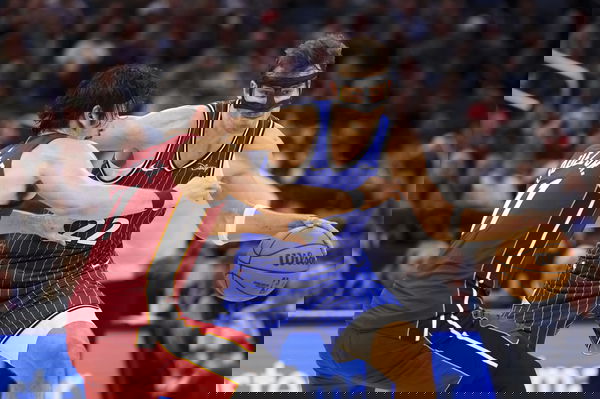
Dec 5, 2025; Orlando, Florida, USA; Orlando Magic forward Franz Wagner (22) drives to the basket past Miami Heat forward Jaime Jaquez Jr. (11) in the fourth quarter at Kia Center. Mandatory Credit: Nathan Ray Seebeck-Imagn Images
Schedule demands raise the stakes. Orlando faces Atlanta and Boston next, followed by a West Coast trip that includes the Clippers and Kings. This is a stretch where even elite teams struggle to break even, and the Magic are now down their most efficient scorer.
Because MRI results ruled out structural damage, Wagner’s path parallels other successful recoveries from mid-grade sprains. Swift progress over the first ten days will determine if Orlando can target a late-December return window. The team’s medical staff will monitor swelling levels, load tolerance, and functional patterns in cutting drills as primary benchmarks. If those remain stable, Wagner could return before Orlando’s early-January homestand.
ADVERTISEMENT
This injury does not derail Orlando’s season, but it forces a recalibration. The Magic can use this stretch to refine offensive structure, build Anthony Black’s confidence, and prepare for a deeper rotation once Wagner returns. For Wagner, the priority is stability and preventing reinjury. For Orlando, the next eight games determine whether they return him to a top-six chase or a play-in scramble.
Franz Wagner’s progress updates are expected within the week. Until then, Orlando’s challenge is simple: stay competitive long enough for their best wing to rejoin the fight.
ADVERTISEMENT
ADVERTISEMENT
ADVERTISEMENT
