

Imago
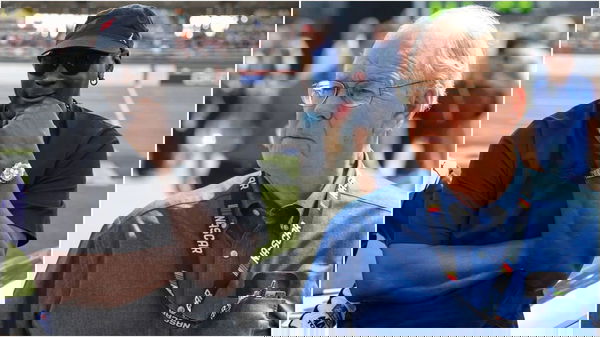
NASHVILLE, TN – JUNE 24: Team 23Xi co-owner Michael Jordan on pit road prior to qualifying for the NASCAR, Motorsport, USA Cup Series Ally 400 on June 24, 2023 at Nashville SuperSpeedway in Lebanon, TN. Photo by Jeff Robinson/Icon Sportswire AUTO: JUN 24 NASCAR Cup Series Ally 400 EDITORIAL USE ONLY Icon2306243801400
Imago
NASHVILLE, TN – JUNE 24: Team 23Xi co-owner Michael Jordan on pit road prior to qualifying for the NASCAR, Motorsport, USA Cup Series Ally 400 on June 24, 2023 at Nashville SuperSpeedway in Lebanon, TN. Photo by Jeff Robinson/Icon Sportswire AUTO: JUN 24 NASCAR Cup Series Ally 400 EDITORIAL USE ONLY Icon2306243801400
“NASCAR, 23XI Racing and Front Row Motorsports are pleased to announce a mutually agreed-upon resolution that delivers long-term stability and creates the conditions for meaningful growth for all teams in a more competitive environment.” On the surface, this post-settlement statement sounded like a clean handshake and a fresh start for the sport. But as the dust settled, attention quickly shifted to what the settlement actually meant behind closed doors.
Watch What’s Trending Now!
Especially financially. While teams and the sanctioning body framed it as a win for the future, reports suggest the real immediate winners may have been the lawyers, with millions changing hands as the case wrapped up.
ADVERTISEMENT
How much Michael Jordan and co. really took home
If you start with the raw math, the settlement window alone tells you how serious this fight had become. Based on expert estimates, NASCAR’s payout to 23XI Racing and Front Row Motorsports likely landed somewhere between $36.5 million and $182.5 million! This staggering range reflects just how unpredictable an antitrust jury trial can be.
That estimate comes from two antitrust experts speaking to Sports Business Journal. Meegan Hollywood, an antitrust litigator at the Shinder, Cantor & Lerner law firm, said she expects NASCAR paid 10% to 25% of the $365 million in damages requested by the teams. On the low end, that’s $36.5 million. On the high end of her estimate, it pushes past $90 million.
A second antitrust attorney, who requested anonymity to speak freely, took it even further. They suggested that it was unlikely the teams would have settled for anything less than 50%. Now, this estimate would put the payout at a whopping $182.5 million. But the settlement check was only part of the financial damage.
ADVERTISEMENT
ADVERTISEMENT
Both sides burned cash at an elite level just to get to the negotiating table. 23XI Racing (co-owned by Michael Jordan) and Front Row Motorsports hired Winston & Strawn. On the other hand, NASCAR retained Latham & Watkins. Now, both are heavyweight firms that don’t come cheap. Hollywood estimated combined legal fees could have reached $50 million, while the second attorney believed the total could have been closer to double that amount.
And that’s before factoring in the nightmare scenario NASCAR was staring down. As Hollywood put it, “The specter of NASCAR facing a billion-dollar damages fee is bet-the-company or bet-the-sports-franchise type of money, so it’s potential for a huge financial loss if the jury finds that way and it’s tripled, so there’s that risk.”
ADVERTISEMENT
Beyond cash, the teams also walked away with meaningful structural wins. NASCAR granted the teams evergreen charter provisions and improved governance terms. NASCAR paid heavily. But it brought certainty, control, and a future not decided by a jury.
Top Stories
Greg Biffle’s $4M Worth Prized Possession Still Without a Buyer Leaves NASCAR Fans Heartbroken

NASCAR World Mourns as Former Watkins Glen President Michael Printup Passes Away at 60
Fox Broadcaster Pens Heartfelt Message as Veteran Announcer Quits NASCAR
Denny Hamlin Offers First Words Since Losing Beloved Father in Anniversary Fire

“This Is Not Racing”: Growing Outrage Erupts Over How Kids Are Being Taught to Win at Any Cost in Modern Motorsports
Why settling the lawsuit was NASCAR’s smartest move
Even if NASCAR ultimately wrote a massive check to close out the antitrust lawsuit, settling was still the cleanest exit available. Reports suggest the sanctioning body may have paid 23XI Racing and Front Row Motorsports tens (or even hundreds) of millions in damages. But walking away from the courtroom also meant walking away from far bigger risks.
ADVERTISEMENT
The most important win for NASCAR wasn’t financial. It was certainty. By settling, the sport avoided placing its future in the hands of a judge and jury who could have imposed sweeping, non-negotiable reforms. Instead, NASCAR retained control over how changes to the charter system and governance structure would be written, enforced, and rolled out.
Even with improved terms for teams, the framework remains NASCAR-led, not court-mandated. That distinction matters. Court-ordered reforms often arrive rigid and permanent, leaving little room for adjustment as the sport evolves. A settlement allowed NASCAR to implement updates on its own timeline and within boundaries it still oversees.
There was also the optics problem. The lawsuit had already begun to expose uncomfortable internal dynamics, and leaked messages tied to the SRX series and prominent figures like Richard Childress hinted at how messy a full trial could become. That episode stirred fan outrage, drew sharp criticism from Childress himself, and even forced a public response from Bass Pro Shops, one of NASCAR’s most powerful sponsors, sending the controversy well beyond the garage and into the spotlight.
ADVERTISEMENT
A prolonged courtroom battle risked airing even more private disputes, power struggles, and financial details. These are the kind of revelations that linger far longer than a settlement figure. Now, with the settlement in place, NASCAR can move forward without further public fractures threatening the sport’s long-term credibility.
ADVERTISEMENT
ADVERTISEMENT
ADVERTISEMENT
