
Imago
Jimmie Johnson
Imago
Jimmie Johnson
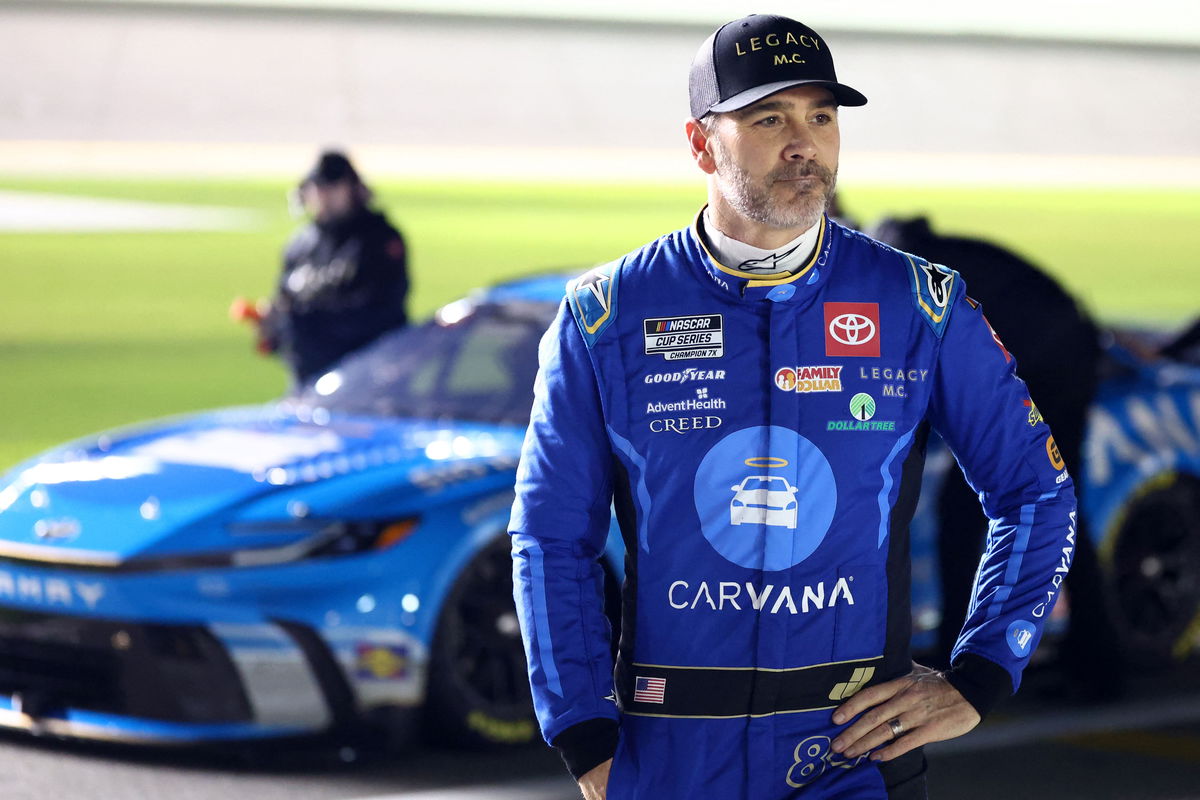
With a social media post teasing the reveal of the Carvana No. 84 paint scheme, Jimmie Johnson confirmed what many fans had been anticipating: his return to the Daytona 500 in 2026. For a seven-time Cup Series champion, simply showing up to NASCAR’s biggest race should have been a straightforward celebration. Instead, a controversial rule change, a guaranteed provisional entry, and confusion over field size and purse eligibility pushed Johnson into the middle of a broader debate about fairness and NASCAR’s entry rules at its biggest race.
Watch What’s Trending Now!
The latest Daytona 500 rule debate started with a simple fan question that quickly spiraled into a full-blown rules explanation. “If the rule is the same as last year, the field will only be 41 if he NEEDS the provisional. If he qualifies, the field will be 40. Right?” a fan asked online, trying to make sense of Jimmie Johnson’s guaranteed entry.
Bob Pockrass was quick to shut that down. “No. The rule changed after the Daytona 500 last year, so the driver now has to commit to using the provisional and getting no points/no purse money,” he replied.
In Johnson’s case, Legacy Motor Club, which he co-owns, applied for and received the Open Exemption Provisional (OEP), meaning the No. 84 Carvana Toyota is locked into the race and the field will expand to 41 cars. The 2026 Daytona 500 will mark Johnson’s 701st career NASCAR Cup Series start, with his starting position determined by his Duel race. Because the provisional is being used, Johnson will not earn championship points or purse money, but he remains fully eligible to compete for the race win and the Harley J. Earl Trophy.
The Open Exemption Provisional itself was announced ahead of the 2025 season as a “promoter’s choice” entry. It was designed to guarantee a spot for accomplished, world-class drivers, including stars from other motorsports, whose presence adds visibility to marquee events like the Daytona 500. Trackhouse Racing became the first team to use the OEP in 2025, applying it to ensure four-time Indianapolis 500 winner Hélio Castroneves made his NASCAR Cup Series debut at Daytona.
Jimmie Johnson has guaranteed spot in Daytona 500. Legacy applied for and has been granted the “open exemption provisional” … so Johnson is guaranteed spot and field will be 41 cars. Johnson won’t get purse $. Where he starts I’d expect depends on finish in duels. @NASCARONFOX
— Bob Pockrass (@bobpockrass) January 7, 2026
However, NASCAR had revised the rule last year. Under the updated language, “The Open Exemption Provisional will be applied only if more than 40 vehicles are qualifying for the Event. In that case, it will be applied regardless of the vehicle’s Qualifying position, and the starting field will be 41.”
If fewer than 40 cars attempt to qualify, the OEP isn’t triggered, and the entry remains eligible for points and prize money. Previously, if an OEP driver qualified on speed, the field stayed at 40. Now, once the provisional is granted, the Daytona 500 becomes a 41-car race by rule, regardless of on-track performance.
And that technical distinction is exactly what set off the fan backlash – something we’ll dive into next.
Fans turn rulebook debate into full-blown Daytona backlash
Once Bob Pockrass clarified the Open Exemption Provisional details, fan reactions came fast (and blunt). One confused fan summed up the initial shock: “Did they change the rule? I thought if he raced/qualified his way in then it’s only 40 cars still?”
The answer, as competition officials confirmed at the beginning of last year, was yes. NASCAR issued a bulletin in March, adding language to Section 5.1.F under “Entry Guidelines” that formally locked in the 41-car field whenever the OEP is activated.
Others questioned why NASCAR even limits itself. “Why can’t we do 43 like it been for many years and Daytona is perfect place for it,” one fan asked, echoing nostalgia for the sport’s pre-charter era.
But the sharpest confusion centered on money. “So he would still be treated as the 41st driver and get no money even if he races his way in?” another wrote. The answer is straightforward but unpopular: no points, no prize money, regardless of performance.
That clarification didn’t sit well. Even with Johnson supporters. “I’m a Jimmie Johnson fan and I think this rule is so stupid. Race your way in or don’t race at all,” one fan admitted. Others had little patience for the nuance at all. “Just stop…” one comment read, capturing the exhaustion many fans feel with NASCAR’s increasingly complex rulebook.
What amplified the reaction is that Johnson isn’t lobbying for special treatment. After retiring from full-time competition in 2020 and returning on a limited schedule in 2023, he has consistently accepted the conditions tied to part-time entries. His recent Daytona history includes a third-place finish in 2025, his best result in the race since 2015, after finishing outside the top 25 in the two prior editions. A two-time Daytona 500 winner (2006, 2013), Johnson enters 2026 chasing a symbolic 84th career Cup win while driving the No. 84 car.
For fans, however, the issue runs deeper than one driver. It’s about transparency, tradition, and whether NASCAR’s effort to guarantee star participation is reshaping what earning a Daytona 500 spot is supposed to mean.
ADVERTISEMENT
ADVERTISEMENT
ADVERTISEMENT
ADVERTISEMENT
