

Imago
Source: IMAGO
Imago
Source: IMAGO
Essentials Inside The Story
- Kyle Tucker’s contract timeline is freezing movement across the market.
- Alex Bregman risks terms and dollars by waiting behind Tucker.
- Bo Bichette’s positioning complicates early commitments from contenders.
The whole offseason is a waiting game for both teams and the players. If you push a bit early or a bit late, you will not be able to get the best deal. And that is exactly what is happening with Kyle Tucker, Alex Bregman, and Bo Bichette.
Watch What’s Trending Now!
While no deals have materialized yet, several front offices are quietly weighing trade contingencies alongside free-agency talks should prices escalate beyond comfort levels.
We can see that both Bregman and Bichette are pushing to get a deal out of the teams, but it might not be time yet.
ADVERTISEMENT
“The segment comes back to the idea that Tucker, Bichette, and Bregman are all staring at each other’s situations,” said the host in a recent episode of The Show Insider. “If you’re Bregman or Bo Bichette… you probably want to see what happens with Tucker first and then see which teams start to sound a little desperate.”
Kyle Tucker has become the defining free agent, with his decision shaping spending across baseball. Projected contracts for Tucker range from 350 million to 425 million, resetting expectations for others. Teams interested in Bichette or Bregman are largely waiting because Tucker establishes the market ceiling.
That dynamic has quietly slowed negotiations league-wide as clubs watch one signing dictate the rest.
ADVERTISEMENT
Tucker holds leverage through performance, ranking tenth in position player WAR since 2021 league-wide overall. He has produced 134 home runs, 105 steals, and a 145 average OPS+ since 2021. Plate discipline strengthens his case, as shown by a 14.6 walk rate and 14.7 strikeout rate. At 29 in January, his prime years align cleanly with long-term contract projections across baseball.
That profile separates Tucker from Bichette and Bregman, whose value depends more heavily on aging curves. Alex Bregman turns 32 after Opening Day, carrying long-term risk by signing before Tucker resets prices. Bo Bichette, though younger, faces defensive questions and position uncertainty that complicate early market commitments for teams.
ADVERTISEMENT
Imago
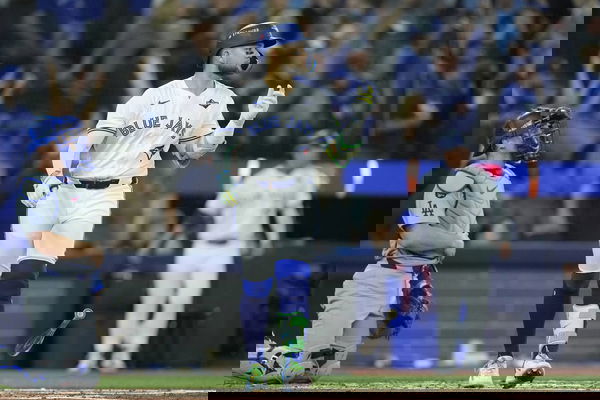
MLB, Baseball Herren, USA World Series-Los Angeles Dodgers at Toronto Blue Jays Nov 1, 2025 Toronto, Ontario, CAN Toronto Blue Jays designated hitter Bo Bichette 11 reacts after hitting a three run home run against the Los Angeles Dodgers in the third inning during game seven of the 2025 MLB World Series at Rogers Centre. Toronto Rogers Centre Ontario CAN, EDITORIAL USE ONLY PUBLICATIONxINxGERxSUIxAUTxONLY Copyright: xJohnxE.xSokolowskix 20251101_lbm_ss9_066
Both players risk locking into deals before teams fully spend leftover budgets freed after Tucker.
The consequences aren’t catastrophic, but they are costly… delayed leverage, compressed negotiating windows, and contracts shaped more by timing than preference.
ADVERTISEMENT
Because Tucker combines durability, patience, power, and speed, front offices view him as the safest elite bet. His market could clear first, allowing clubs clarity before committing secondary dollars to remaining stars. If Tucker signs quickly, Bichette and Bregman may benefit from urgency once top money leaves boards.
Kyle Tucker remains the chess piece everyone watches, turning Bichette and Bregman into pawns waiting. Teams hesitate, and the offseason stretches as if Tucker holds the calendar hostage. In this market, patience might pay, but only Tucker decides who finally cashes the big checks.
ADVERTISEMENT
Teams start to reconsider Kyle Tucker’s move after Luxury Tax pressure
Kyle Tucker is quietly testing the patience of the league, and the calculators in front offices are smoking. Suddenly, numbers on spreadsheets matter more than highlight reels, and even the richest clubs are flinching. When the price of talent triggers a tax headache, suddenly long-sought stars like Tucker feel a lot less affordable and a lot more negotiable.
Kyle Tucker enters free agency with strong numbers, hitting .266 with 22 homers and 25 steals in 136 games in 2025. His .841 OPS and four All-Star nods underline his value among position players entering the market. Teams once projected him for a 10‑year, roughly $391 million contract, around a $38.8 million average annual value.
Top Stories
Toronto Loyalist Raises Alarm as Shocking Bo Bichette Update Puts Blue Jays’ 2026 Dreams on the Brink

Red Sox’s Alex Bregman Fallout Becomes Evident as Two MLB Rivals Ignite Fierce Bidding War, per Report

$275M Cardinals Star’s MLB Future All but Sealed as U.S. Sportscaster Asks $2.75B Team to Make Bold Move

Mets Become Leading Contender For 30YO Ex-Phillies Star after David Stearns’ Mega Offseason Misses, Per Insider

Kyle Tucker Throws Blue Jays Into Chaos as Ross Atkins Forced Into Harsh Job Cuts

With most long‑term free agent deals agreed by late December, the shrinking clock heightens urgency for Tucker’s camp and suitors.
ADVERTISEMENT
Luxury tax pressure is now reshaping that landscape for high‑payroll clubs reluctant to add big short‑term money. Teams above the $304 million luxury threshold face steep penalties exceeding Tucker’s salary, making them cautious bidders. That leaves clubs with lower tax exposure as more realistic landing spots for his services if a long deal falls through.
The tension between historical contract timing and luxury tax reality has fans feeling the stakes rise with every passing day.
Kyle Tucker’s free agency now feels like a tax lesson disguised as a blockbuster negotiation. Teams juggling luxury penalties might rethink chasing Tucker despite his All-Star numbers and projected $38.8 million salary. Every passing day intensifies pressure, turning fans into reluctant accountants watching talent clash with financial reality.
ADVERTISEMENT
ADVERTISEMENT
ADVERTISEMENT
ADVERTISEMENT
