
USA Today via Reuters
credit: Jeff Curry-USA TODAY Sports
USA Today via Reuters
credit: Jeff Curry-USA TODAY Sports
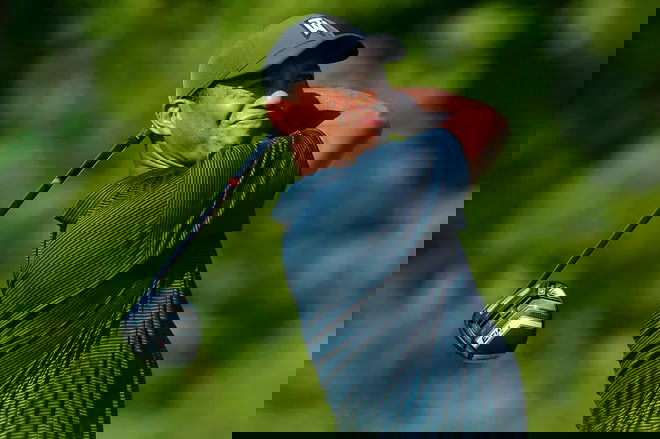
You must know about golfer’s elbow. It is called Medial epicondylitis, and it is a condition that causes pain where the tendons of your forearm muscles attach to the bony bump on the inside of your elbow. Symptoms often include pain and tenderness on the inner elbow, stiffness when making a fist, weakness in the hands and wrists, and sometimes numbness or tingling in the ring and little fingers. The discomfort can spread, making everyday movements or swinging a golf club painful. But the good news is that it is treatable. So, in this article, we’re going to cover the best exercises recommended by Dr. Jared Beckstrand to help you treat a golfer’s elbow and strengthen the muscles around the elbow.
Watch What’s Trending Now!
Top Stories
Charley Hull Opens Up on Traumatic Divorce from Ex-Husband for the First Time Ever

LIV Golf to Cut Ties With Veteran Pro After His PGA Tour Return Intentions Became Public

‘Penalize Him’: PGA Tour Q-School Faces Heat as Slow Play Incident Goes Unaddressed

Congratulations Flood in from Lydia Ko & More as LPGA Star Makes Personal Announcement

Lydia Ko Learns Hard Lesson After Trying to Copy Jason Day’s Short-Game Technique

1. Active Range of Motion (ROM) Series
“The first thing that I always like to start with is an active range of motion series to just warm that area up, get the muscles going, and just get it ready for some of the other exercises that we have,” Dr. Jared begins in the video. He begins with basic flexion and extension exercises.
ADVERTISEMENT
Start by being seated in an upright position, with your forearm supported either on your lap or another flat support. Extend your arm with your palm facing up and bend the wrist up and down about 10 times. Then, similarly, with your forearm still supported, rotate your palm up and down, back and forth 10 times. This is pronation and supination of the wrists.
Follow up this exercise with big circular rotations of the wrist, 10 counterclockwise and 10 clockwise, all in a comfortable, pain-free range. These warm-up exercises will help get some blood flow into the area and build momentum for the next exercises.
ADVERTISEMENT
2. Forearm Stretches
The next exercise is stretching the wrist flexors and extensors. This will help relieve tension on the medial epicondyle, or the inner muscles of the elbow. As Dr. Jared instructs, extend your arm while being seated or standing upright. Now, with your hand, pull those fingers back toward the same shoulder. The stretch should be felt through your forearm muscles and wrist flexors.
If you’re comfortable, an alternate version of this stretch can be performed, which will provide a deeper stretch. In this version, the fingers will point downward, into a supinated position with the palm up. Then, pull the fingers back toward your hips. Hold for 20 seconds and repeat twice if necessary. These are the wrist flexor stretches.
ADVERTISEMENT
For the wrist extensor stretch, it’s similar, with your palm facing down and pulling the hand toward your body. This also should be performed for 20 seconds. Alternate between these exercises three times, 20 seconds each.
3. Wrist Flexion & Extension Strengthening
Once you’ve performed the stretches, it’s time to incorporate some strengthening exercises into your routine. These will help introduce some tension and muscle activation into the area. The first is a wrist flexion exercise. You can use any light weights, a water bottle, or even a resistance band.
ADVERTISEMENT
Start with your forearm placed on a surface, with the weight in your fingertips, and curl it up towards the ceiling. Hold it for two seconds, then slowly return to the starting position. It should almost replicate the movement of what a bicep curl would look like, but only for your wrists.
You ever heard the phrase “golfers elbow”?
Maybe you’ve dealt with it as a baseball player without even knowing.
Here’s how you can make sure you DONT deal with it:
(Short Thread) pic.twitter.com/AUNK9IEeUh
— Jack Barry (@johnb_sp) March 27, 2024
Begin with 10 reps for three sets and gradually work up to 15 or 20 reps as tolerated. And if it’s painful to do it while raising the weight, you can use your other hand for additional support and assistance, as Dr. Jared suggests. If you’d like to do this with a resistance band, step on the band and perform the same movement. The mechanics should look the same.
ADVERTISEMENT
Similarly, for the wrist extensors, place your palm down, then lift the back of your wrist toward the ceiling using a weight or resistance band. Follow the same sets and reps as wrist flexion, which would be three sets of 10/15 reps. This will help maintain muscle balance and reduce strain on the medial epicondyle.
4. Pronation/Supination Strengthening
The next exercise for the golfer’s elbow is a pronation and supination motion. Sit with your forearm supported on a table or your thigh, holding a hammer or dumbbell. Slowly rotate your palm down, hold it for 2 to 3 seconds, then rotate your palm up and hold again. Repeat this motion 10 to 15 times for three sets, gradually increasing reps as tolerated. If a hammer isn’t available, a dumbbell can be used, though it may feel a bit awkward to hold. Start with 10 reps three times, and then work into 15 and 20 reps three times as your pain allows.
ADVERTISEMENT
5. Shoulder Activation
The last exercise, the resisted band W’s, is to activate your shoulders. This exercise will not just strengthen but will also help avoid the pain from coming back. Using a resistance band, stand with elbows bent at 90°. Hold the resistance band, squeeze the shoulder blades together, and pull your hands apart so that it looks like you’re forming a ‘W’ position. Hold for a few seconds and slowly return. Repeat 10 reps for three sets.
Incorporating these five exercises consistently can relieve pain, restore strength, and prevent future injury. Start gently, progress gradually, and listen to your body. Dr. Jared also suggests that during the time of the golfer’s elbow, there is “activity modification.”
ADVERTISEMENT
He mentions that doing some form of activity “caused pain and overuse in the area,” which needs to be cut down. Only then will the exercises given above be of some use and will help you be injury-free. Once you’ve incorporated these exercises and have done them for a good period of time, you can begin reintroducing playing or the activity at full strength.
ADVERTISEMENT
ADVERTISEMENT
ADVERTISEMENT
